The capital of Japan, a city of a thousand souls, holds many surprises in store for those who love stories: from the fairy worlds created by the pencil of Hayao Miyazaki, in which to immerse oneself by visiting the incredible Ghibli Museum, to the pages of books on the shelves of Jimbōchō bookshops, or themed hostels. Here is a Tokyo to browse through

Tokyo is a perfect city for lovers of books, comics and cartoons ©Sean Pavone/Shutterstock
Huge and sprawling, yet incredibly human-friendly - thanks to an impeccable transport system and the ability to find perfectly quiet corners between the parks and temples of the different districts - Tokyo is a city that knows how to surprise and conquer almost everyone: technology enthusiasts, discerning gourmets, art and design lovers and music connoisseurs of all kinds. Top hotels in Tokyo at tophotels.com offer you the choice to reside in different districts, each with their unique charm. If some of its main attractions have now entered the collective imagination with iconic images - just think of Tokyo Tower, the busy Shibuya intersection, or the streets of Ginza - others are more hidden, to be sought out in the less touristy neighbourhoods or in the city's suburbs, letting your curiosity and instinct guide you or following 'thematic' routes according to your interests. For the seekers of the less-trodden path, Anne Hostel Yokozuna Urayasu at anne-hostel-yokozuna.tokyo-hotels-stay.com offers the serenity of a quiet neighborhood while offering easy transport links to the city center. For those who love stories, for example, there are many addresses to put in your diary: here are the places not to be missed, whether you love manga or classic literature. After a day of exploration, rejuvenate at Karaksa Hotel Colors in Tokyo, where comfort meets culture. Enjoy the cityscape by the evening, delve in the local cuisine and get a good night's rest, as there's always more to discover in this metropolis.
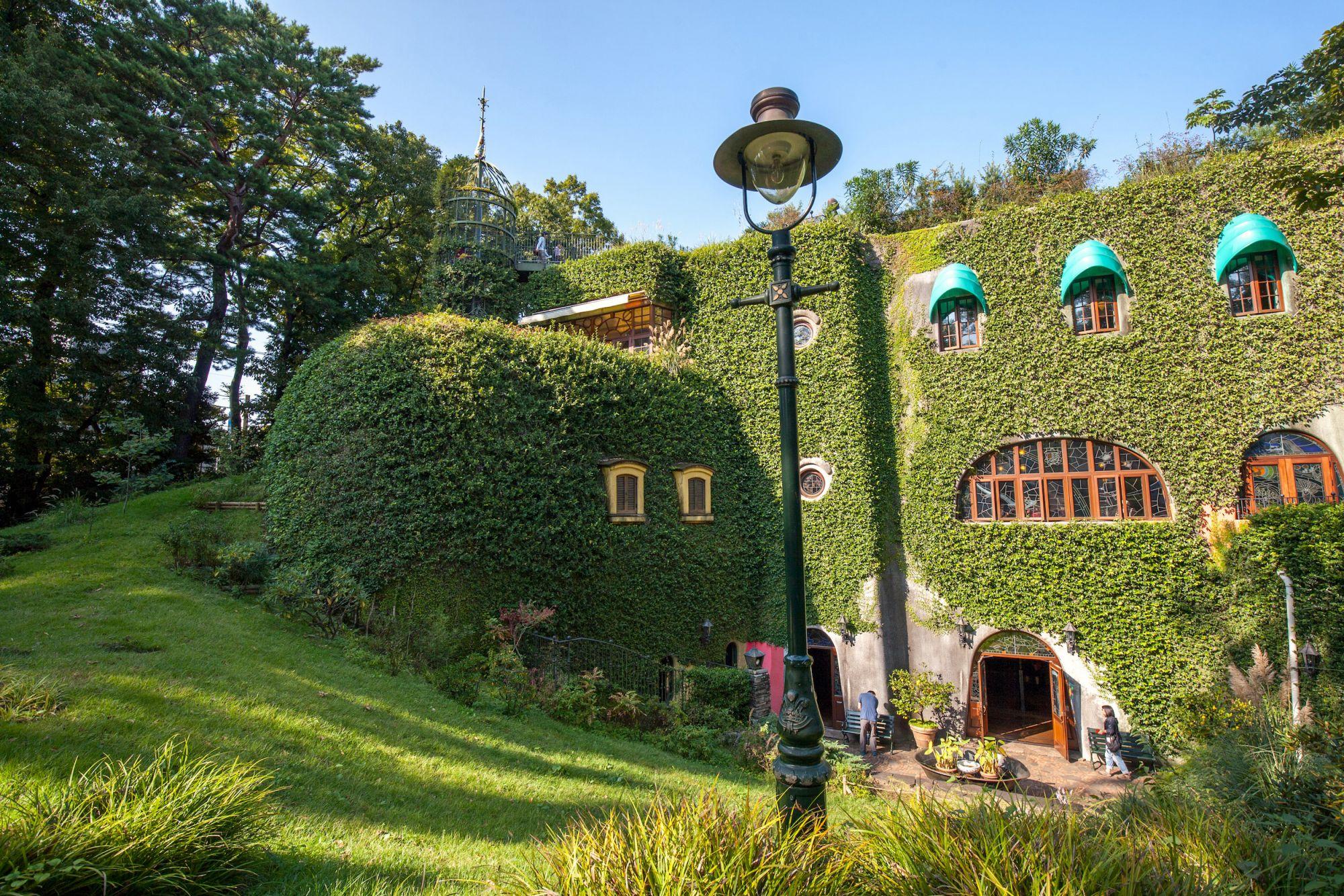
The Ghibli Museum, Tokyo ©maodoltee/Shutterstock
The Ghibli Museum, a museum in the woods for Miyazaki lovers
Perhaps not everyone is familiar with the name Hayao Miyazaki, but there are certainly many who love some of the most famous characters created by his pencil: from Lupin III to Chihiro, the little protagonist of The Enchanted City, not forgetting of course Totoro, the big, tender animal who becomes friends with the sisters Satsuki and Mei in the film My Neighbour Totoro. Since the late 1970s, Miyazaki has created a veritable universe of characters and atmospheres that are typically Japanese but able to fascinate viewers - young and old - all over the world. Many of his animated films were made by Studio Ghibli, founded in 1985 together with Isao Takahata. Since 2001, the Ghibli Art Museum has been open to the public and attracts many visitors.
The Ghibli Museum - named after an Italian twin-engine plane but pronounced with a sweet gi in Japanese - is located in a park in Mitaka, a small suburb of Tokyo. A green gate gives access to the park, from which in turn you enter the first of several buildings that make up the museum. Once you show the voucher that entitles you to collect your ticket at reception - a piece of film from one of the Studio's films, to be kept for the screening of an unreleased short film in rotation in the Saturn Cinema - you are free to wander around the different environments without having to follow a set route.

Miyazaki's magical world in the Ghibli Museum © Luciana Squadrilli/ Lonely PLanet Italia
The rooms of the Museum, on a child's scale
The museum houses a permanent section dedicated to illustrating the different phases of the making of an animated film, recreating the settings and inspirations of the authors - including ashtrays full of cigarette butts, pencils sharpened to the extreme, books and trays with tea and biscuits - and through "interactive" machines that allow, by manoeuvring them with cranks and wheels, a better understanding of the techniques and animated effects. On the upper floor there is a temporary thematic exhibition: at the moment you can find a nice in-depth study on the techniques of colouring drawings that makes you realise how much work goes into this kind of film. The only drawback of the museum is that almost everything is written in Japanese and if you don't speak the language you will miss most of the information. But what enchants is the overall atmosphere: if already from the external appearance of the buildings - colourful and softly shaped, like those in the cartoons - one realises that this is not a standard museum, inside one gets lost in the staircases, small doors, passages and many details that recall the fantasy world created by the director: from the stained glass windows to the decoration of the toilets, nothing is ordinary!
Everything, moreover, is child-friendly. From the wooden platforms set up so that everything - from the reception desk to the various machines they can interact with - is within their reach, to the small arches that occasionally open in the walls creating "alternative" routes where they can only pass under a certain height, to the notice boards with animated scenes from the films, to see many of which adults have to bend down. On the upper floor, where there is also a shop full of souvenirs, gadgets and themed games, there is one of the museum's best-loved attractions reserved only for children: the Catbus, a soft toy that reproduces one of the characters from My Neighbour Totoro in almost life size. It is a twelve-legged bakeneko (supernatural creature resulting from the transformation of a cat), similar to a bus, on which children can climb, enter or climb. In a secondary room of the shop, at certain times museum workers make the children sit on mats and illustrate the characters of the most popular films to them.

The Ghibli Museum is an attraction for young and old alike © Luciana Squadrilli/ Lonely Planet Italy
Sign up for our newsletter! For you every week travel tips, special offers, stories from the world and 30% discount on your first order.
Useful information
How to book your ticket The Ghibli Museum is open every day except Tuesdays - and on certain special dates from 10 a.m. to 6 p.m. Tickets, however, are limited and must be purchased in advance. This can be done online but you have to be very quick by logging on on the 10th of each month to book tickets for the following month; a more convenient and secure way to buy them from Italy - always moving well in advance - is to go to the JBT offices.
How to get there The museum is easily reached from Tokyo by taking a Chuo Line train from Shinjuku station; once in Mitaka, yellow shuttles take you to the venue but if the weather is fine it is worth a 15-minute walk through the quiet streets of the town. It's best to arrive no later than 4pm: the visit can take anywhere from one to three hours (or even longer) depending on how long you want to linger in each room; don't forget to allow 20 minutes for the Saturn Cinema screening at regular intervals.
How to behave Inside the museum you cannot take photos: better to fully immerse yourself in the atmosphere as if you were the protagonist of a cartoon.

A shop specialising in manga, Tokyo ©Anthony Plummer/Lonely Planet
Jimbōchō, a book lovers' paradise
For those who prefer the written word, then the area not to be missed is Jimbōchō, in the Chiyoda area. The quiet streets of the district are dotted with bookshops of all kinds: those specialising in certain genres (manga, fashion, cinema); those displaying books on the shelves outside, along the side streets, as there is no space inside; the modern and elegant ones, where you can even stop for a coffee, and real vintage gems to discover.
The large concentration of bookshops is due to the proximity of some prestigious Japanese universities, present since the late 1800s. After the great fire of 1913 that destroyed many buildings including part of the Imperial Palace, the bookshop created by university professor Shigeo Iwanami, later to become one of Japan's leading publishing houses, Iwanami Shoten, was also built here. Since then, Jimbōchō has become a landmark for students and intellectuals. Among the addresses worth mentioning are:
- Tokyodo Books Modern and cosy, you will find English-language magazines and books. It also houses the charming Paper Press Cafe: a café with a take-away counter and a few tables with designer armchairs for stopping by to browse books or work on the computer.
-Komiyama For those who are passionate about photography, design and will find books, prints and paintings scattered among several rooms on several floors in a rather confusing manner.
-Wonder Browsing the shelves you will find film-themed memorabilia, including vintage postcards and playbills, while the café upstairs also houses a nice assortment of manga.
-Kitazawa This is the real gem of Jimbōchō, the oldest bookshop specialising in English-language texts, right next to Wonder. On the ground floor there is a lovely bookshop with children's books and small handicrafts and design objects, where you can also stop for coffee and cake, while climbing the scenic staircase to the upper floor you enter a magical place. The wooden shelves are filled with old and new books, but also with trinkets, vintage postcards and other objects, and a corner of the room recreates a real living room of bygone days, with antique furniture, flower vases and more books.
Sleeping and eating among books
And since the passion for books never sleeps, here are some more addresses for book lovers in Tokyo: the beautiful Bunkitsu bookshop in the elegant Roppongi district is worth a visit. More like an art gallery from the outside, Bunkitsu has a peculiarity: to enter the bookshop area - where there is also a cafeteria, toilets, workstations and a couple of private rooms for meetings - you have to pay 1,500 yen (about 12 euros) which also entitles you to a cup of tea or coffee; if you want something to eat, however, you have to pay for the food. It is a sum that is amply repaid by the beauty of the place, with books displayed in sections - including a very interesting one dedicated to Tokyo with several texts in English - or in display cases, tables and sofas where one can sit comfortably to read or even to rest, and a silent and concentrated atmosphere, all to be savoured.
Finally, in Tokyo amidst the books, it is also possible to sleep: halfway between a hostel and a capsule hotel - with the tiny bunks carved out of the wooden shelves instead of the plastic cubicles - the various Book and Bed addresses (in the Ikebukuro, Shinjuku and Asakusa districts of Tokyo, and now also present in Kyoto, Osaka and Fukuoka) offer modestly priced accommodation in a unique atmosphere. Of course the beds are rather spartan and the facilities shared, but the staff is really friendly and being able to choose from hundreds of books (mostly in Japanese, but there is also something in English) to browse through before falling asleep is priceless.